Turning 18: Essential Legal Documents
There is a point most families don’t fully appreciate until it arrives. Your child turns 18, and while daily life may feel unchanged, the law now treats them as an adult. That shift affects who can access information, who can make decisions, and who is allowed to step in if something unexpected happens.
Many parents are surprised by how immediate that change is. In practical terms, you may no longer be able to receive information or act on your child’s behalf, even in a medical setting or when dealing with a financial institution. Being listed as an emergency contact or continuing to provide support does not change that. The relationship remains the same, but the legal authority does not.
This is not about overstepping or inserting yourself into decisions that belong to your child. It is about recognizing that this stage of life is meant for independence, growth, and personal decision-making. At the same time, it is reasonable to have a structure in place so that if something serious happens, the people your child trusts are not left on the outside looking in.
Putting the right documents in place allows your child to remain in control while also deciding who can step in if needed. It creates a balanced approach where they lead their own decisions, and you remain available under the law when your involvement is appropriate.
-
This document allows your child to choose someone they trust to handle financial and legal matters on their behalf if they are unable to do so themselves. That authority can cover a wide range of situations, from signing documents and accessing accounts to dealing with banks, landlords, or service providers.
Although it is often thought of in connection with incapacity, it is just as valuable in more routine situations where your child is unavailable, traveling, or simply unable to address something in the moment. Having someone already authorized can prevent delays and avoid unnecessary complications.
Without this document, financial institutions and other third parties will typically refuse to speak with you or allow you to act, even if the issue is time-sensitive. Being a parent or an emergency contact does not change that.
A Durable Power of Attorney fills that gap by giving clear, recognized authority to step in when needed. It allows your child to remain in control while making sure that, if something arises, the person they’ve chosen can act without delay or unnecessary obstacles.
-
This document allows your child to name someone they trust to make medical decisions on their behalf if they are unable to communicate those decisions themselves. It puts the right person in place to step in during situations where immediate guidance is needed.
Once your child turns 18, doctors and medical providers are not automatically allowed to take direction from you. Even in serious situations, providers may require clear legal authority before involving you in decisions about care, treatment, or next steps.
A Health Care Surrogate designation addresses that directly. It allows your child to decide in advance who should speak for them, rather than leaving that question unanswered in a critical moment. It also helps avoid delays, uncertainty, or disagreements about who has the authority to act.
With this document in place, your child remains in control of their medical decisions while making sure that, if they cannot speak for themselves, the person they trust is recognized and able to act without hesitation.
-
This document allows your child to give you permission to access their medical information and communicate with doctors, hospitals, and other providers. It does not give decision-making authority, but it allows you to be informed and involved.
Medical privacy laws are strict, and providers are often cautious about what they can share. Without written authorization, even basic updates or confirmation of treatment can be limited or withheld, regardless of your relationship.
A HIPAA Right of Access and Medical Release removes that barrier by clearly identifying who is allowed to receive information. It allows your child to control who can stay informed, so that if something happens, you are not left trying to get information without the legal ability to receive it.
This works alongside the Health Care Surrogate designation. One allows someone to make decisions if needed, while this document allows trusted individuals to stay informed and communicate with providers as situations develop.
-
This document addresses access to your child’s digital life, including email accounts, social media, cloud storage, and other online platforms. It allows your child to decide who can access or manage those accounts if access is ever needed.
A significant portion of daily life now exists online. Important information, communications, financial records, and personal content are often tied to accounts that are protected by strict privacy policies and login credentials. Without clear authorization, even a trusted parent or family member may be unable to access or manage these accounts, regardless of the circumstances.
A Digital Assets Authorization and Directive provides that authorization in advance. It allows your child to specify who can step in, under what circumstances, and to what extent. This avoids situations where access is locked or delayed at a time when information may be time-sensitive or necessary to handle practical matters.
With this document in place, your child maintains control over their digital presence while making sure that, if needed, the right person can access and manage those accounts without unnecessary barriers.
Heading Off to College: Additional Considerations
When your child leaves for college, the dynamic changes again. Distance, schedules, and a new environment mean you are no longer nearby to step in or help work through issues in real time. What may have felt theoretical at 18 becomes more practical when they are living, studying, and managing day-to-day responsibilities on their own.
Why the Same Documents Matter More Now
The documents discussed above take on added importance in this setting. If something needs attention, whether it involves a financial issue, a housing matter, or a medical situation, you may not be able to simply show up or make a call and expect cooperation. Having clear authority in place can make the difference between being able to help and being turned away.
School Forms and Authorizations
In addition to these documents, most colleges and universities have their own forms and authorization processes. These often include medical releases, housing-related permissions, emergency contact designations, and other institution-specific requirements. Even with properly executed legal documents, schools will typically rely on their own internal forms before sharing information or allowing involvement. Those forms should be completed directly through the school.
Understanding FERPA
The Family Educational Rights and Privacy Act, or FERPA, is a federal law that restricts access to a student’s education records once they turn 18 or enroll in college. This includes grades, transcripts, disciplinary matters, and, in some cases, billing or account information.
Without a signed FERPA authorization, the school may not speak with you about these matters at all, regardless of your role as a parent. A FERPA release allows your child to decide who can receive that information, while keeping control over what is shared.
Everyday Access and Practical Considerations
Beyond school records, there are routine situations where access can become an issue. Financial accounts, tuition portals, lease agreements, and service providers may all require direct authorization before speaking with anyone other than your child. Deciding in advance how access should be handled can avoid unnecessary delays or frustration.
Digital Access
Digital systems are central to how students communicate and manage responsibilities. School email, online portals, and account-based platforms often contain critical information. A clear plan, supported by proper authorization, is far more reliable than informal sharing of login credentials.
A Balanced Approach
This stage is not about maintaining control. It is about respecting your child’s independence while making sure that, if something needs attention, the structure is already in place for the right people to stay informed and step in when appropriate.
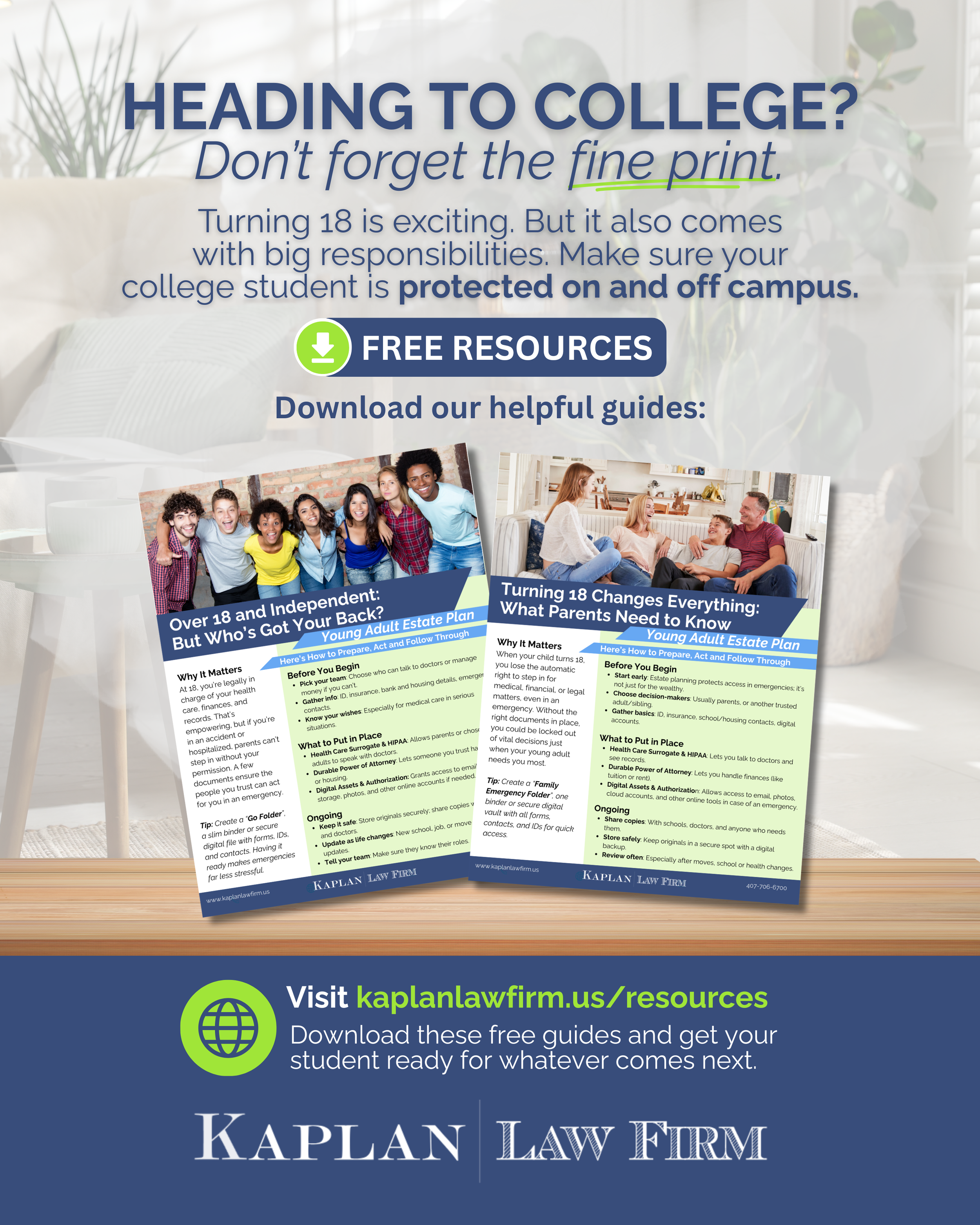
Printable Guides